
Japanese Small Retailers Group Buying for Baseball Hat | Baseball Cap | xhcaps.com
As Japan prepares to host the 20th Asian Games Aichi-Nagoya 2026, the excitement is palpable across the country. From Nagoya's bustling streets to Tokyo's commercial hubs, local retailers are eager to capitalize on the surge in tourism and domestic interest in sports merchandise. However, small and medium-sized retailers in Japan face significant procurement challenges. The dominance of large trading companies and the high standards of Japanese consumers make it difficult for independent shops to source high-quality custom caps and oem hats at competitive prices. This is where the combination order model—pooling orders from multiple small retailers—offers a powerful solution.
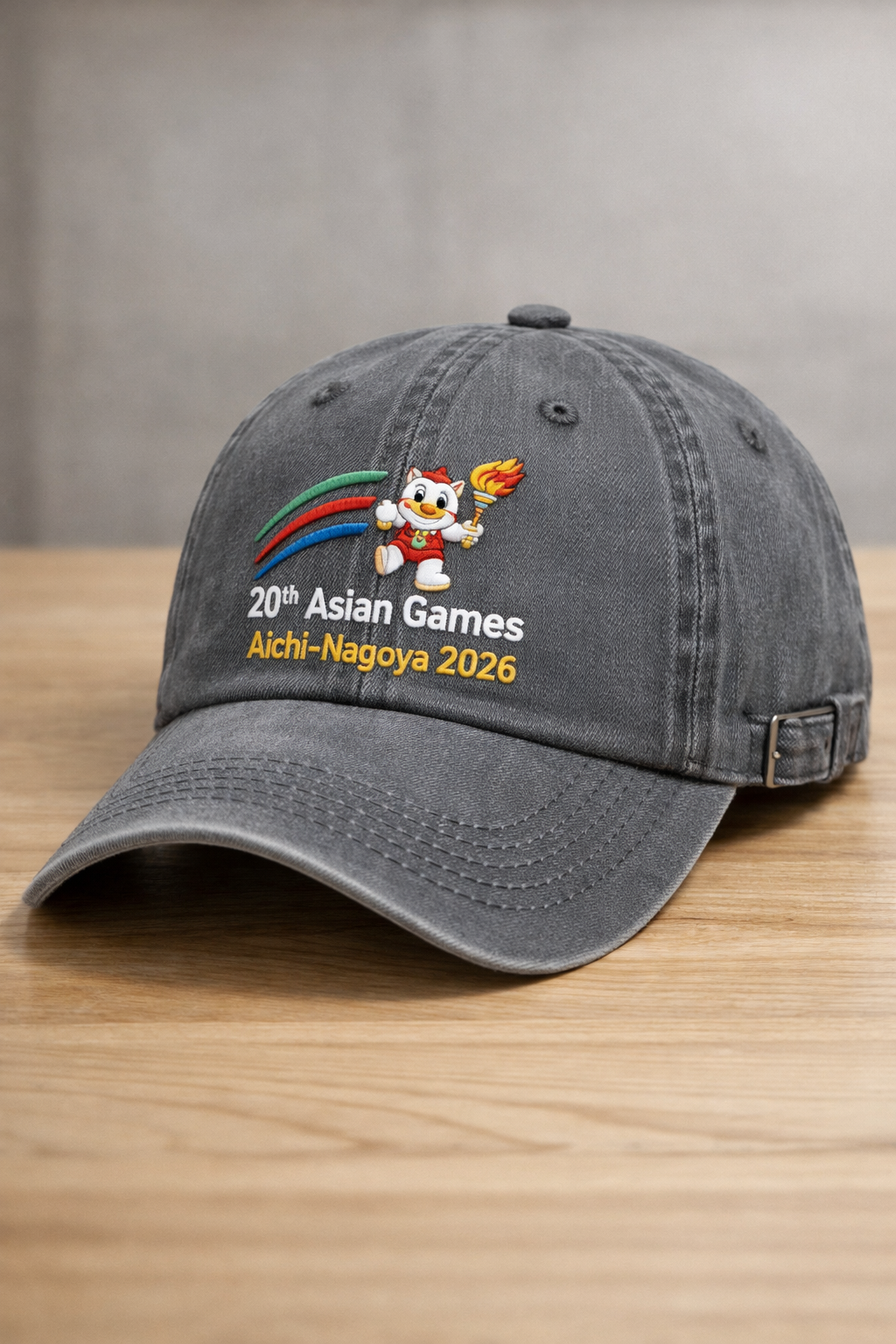
The 20th Asian Games Aichi-Nagoya 2026 Embroidered gray Adjustable Cotton Denim Baseball Cap is a standout product that exemplifies the quality and style Japanese consumers demand. The cap's embroidered design, adjustable fit, and durable cotton denim fabric make it a desirable item for both locals and tourists. However, for a small souvenir shop in Nagoya to order this product directly from a hat manufacturer, the MOQ might be 1,000 pieces—far more than they can sell. By collaborating with other retailers in a group buy, they can order a smaller quantity while still benefiting from the economies of scale that come with a larger combined order.
For a Private Label Hat Manufacturer, the Japanese market is attractive but demands perfection. Japanese retailers often require custom labeling, unique packaging, and precise quality control. These requirements typically come with higher MOQs. Group buying helps overcome this. A collective of small fashion boutiques in Tokyo's Harajuku district pooled their resources to create a private-label range of Campus Style Embroidered Denim Cap . By combining their orders, they achieved the MOQ for custom hang tags and inner labels, allowing them to offer a premium branded product that resonated with their fashion-conscious customers. The collaborative effort also enabled them to share the cost of developing custom colors, which are essential in the Japanese market.
Japanese culture values harmony and cooperation, which makes the group buying model particularly effective. Retailers are often willing to cooperate on procurement, seeing mutual benefit in collective action. A group of shops in Aichi prefecture, the host region for the 2026 Games, recently formed a buying cooperative to source Supporter Fan Gear Embroidered Headwear. They targeted international visitors who would be attending the events, offering high-quality caps as souvenirs. The cooperative's ability to pool orders allowed them to compete with larger chain stores, offering a comparable product at a competitive price, while maintaining the charm of independent retail.
The economic benefits of group buying are substantial. A single retailer ordering 200 caps might pay ¥1,200 per cap from a cap b2b supplier. When ten retailers combine their orders to 2,000 caps, the unit price might drop to ¥800—a 33% saving. For small retailers operating on thin margins, this saving is critical. A Kyoto-based retailer who participated in a group order for the 20th Asian Games Aichi-Nagoya 2026 Embroidered gray Adjustable Cotton Denim Baseball Cap noted that the saving allowed him to price the cap competitively for the tourist market while maintaining a healthy profit margin.
Shared logistics are another major benefit. International shipping to Japan, with its associated customs duties and domestic distribution costs, can be prohibitive for small orders. By consolidating shipments, retailers share the freight and customs brokerage costs. A group of retailers in Hokkaido pooled their order and shipped it to a central warehouse in Tokyo. From there, domestic couriers handled the final distribution. This approach reduced the per-unit shipping cost by nearly 60% compared to individual shipments. A retailer commented, "We could never have afforded to import these hats ourselves. The shipping cost alone would have killed our margins."
Quality assurance is paramount in the Japanese market, where consumers are known for their high expectations. Group buying allows retailers to collectively fund a pre-shipment inspection, ensuring that the caps meet the required standards. A group of retailers from Osaka ordering Team Spirit Adjustable Cotton Cap designs for a local sports festival sent a quality inspector to the factory. The inspection identified minor issues with the embroidery thread, which were corrected before production. This collaborative quality control process ensured that the final product was flawless, maintaining the reputation of the participating shops.
The upcoming Asian Games provide a unique opportunity for Japanese retailers. The 20th Asian Games Aichi-Nagoya 2026 Embroidered gray Adjustable Cotton Denim Baseball Cap is a product that connects directly with the event. Retailers in Nagoya, in particular, are looking to offer merchandise that celebrates the games. A group of gift shops in the city combined their orders for this cap, along with other event-related headwear. They marketed the caps as official-style souvenirs, leveraging the excitement around the games to drive sales. The group buy allowed them to secure the caps well in advance, ensuring they had stock during the peak tourist season.
The model also supports diversity of product offerings. Retailers can pool their orders for different styles, allowing them to offer a wider range of products without large inventories. For example, a group of shops might combine orders for Family Matching Embroidered Denim Caps, Kids' Soft Cotton Baseball Cap , and Comfort Fit Soft Cotton Baseball Hat. This variety appeals to families and tourists looking for matching outfits or gifts. A boutique in a tourist area noted, "We can now offer a complete family set of hats. Before, we could only afford one style. This has significantly increased our average transaction value."
From the perspective of a Custom Hat Manufacturer, working with a Japanese buying group is appealing due to the predictability of large orders and the willingness of Japanese buyers to communicate precisely. Manufacturers appreciate the clear specifications and professional communication, which reduce misunderstandings and production delays. The 20th Asian Games Aichi-Nagoya 2026 Embroidered gray Adjustable Cotton Denim Baseball Cap benefits from this clarity, as the detailed embroidery requirements are easier to execute with a large, single production run.
In conclusion, the combination order model is a strategic imperative for independent Japanese retailers. It enables them to overcome the disadvantages of small scale, access competitive pricing, share logistical burdens, and ensure quality compliance. As Japan gears up for the 2026 Asian Games, the model offers a clear path for small retailers to participate in the economic opportunity presented by the event. The 20th Asian Games Aichi-Nagoya 2026 Embroidered gray Adjustable Cotton Denim Baseball Cap exemplifies the type of product that small retailers can successfully source through group buying, delighting customers and building sustainable businesses.
If you are looking for a professional hat export manufacturer with higher cost-effectiveness, please fill in your email address and send us an email, or contact us directly via WhatsApp! We will reply to you as soon as possible.
Contact Information:
Sweet Ocean Headwear Group Co., Ltd.
Korinna Zou
Mob./ WhatsApp / Wechat: +86 138 2926 4153
Email: Korinna@xhcaps.com ; sales@xhcaps.com
Website: https://www.xhcaps.com/
https://www.youtube.com/@SweetOceanCaps
https://www.instagram.com/sweetoceanhats/
https://www.facebook.com/profile.php?id=61577366520008
https://www.linkedin.com/in/korinna-zou-669bb9355/
https://ca.pinterest.com/korinnazou/
Sweet Ocean Headwear Group Co., Ltd.
Headquarters: No.1468, Building G1, Tian'an Cyber Park, No.1 Huangjin Road, Nancheng, Dongguan, Guangdong, China 523080
Factory: Shipai, Dongguan, Guangdong, China
Tel: +86 769 2285 0886, 86 769 2315 6836,
Mob./ WhatsApp / Wechat: +86 138 2926 4153
E-mail: Sales@xhcaps.com


